
Manufacturing
One pallet becomes two. Which shipping labels travel with the freight?
A worked despatch example follows 54 cartons into two new logistic units and keeps the packing list, pallet labels and receiving scans in agreement.
A warehouse that dismantles a pallet and builds two new logistic units needs a distinct Serial Shipping Container Code (SSCC) for each new unit. Copying the inbound pallet label onto both loads gives the receiver two physical objects with one identity. The carton count may reconcile at despatch while the second arrival looks like a repeated scan.
Follow the cartons through the split
Consider an Australian distributor receiving 54 cartons on one pallet. A regional branch orders 18. The warehouse takes the original load apart and rebuilds the remaining 36 as a separate outbound unit. Close the inbound pallet record at that transformation. Record which 18 cartons went to the branch and which 36 went to the second destination. Preserve each product and lot reference wherever the business tracks those attributes.
The identifiers in the table are plain-language aliases for the example. A working GS1 label uses the SSCC allocated by the business responsible for creating the logistic unit. The pallet’s weight, destination and contents can sit alongside that identifier in the despatch record. Printing a second physical label for another side of the same pallet is a different operation from creating a second pallet.

Worked data
Pallet record | Movement | Cartons |
Inbound | Closed on rebuild | 54 |
Branch load | New unit | 18 |
Second load | New unit | 36 |
Download the figures in this worked example (CSV)
Test the receiving screen
Scan the branch pallet twice in a training transaction. The receiving system should show one logistic unit and offer a duplicate-scan outcome. Then scan the second pallet. Its different identity should open the other contents record. That two-part test catches both failure modes: double-counting a repeated scan and discarding a genuine second arrival.
If the original pallet continues intact, the premise changes. Trace what actually happened on the dock before retiring an identifier. On a busy despatch shift, the most useful evidence is a dated relationship between physical units, their contents and the outbound consignment.
Sources
GS1 · Logistic Label Guideline
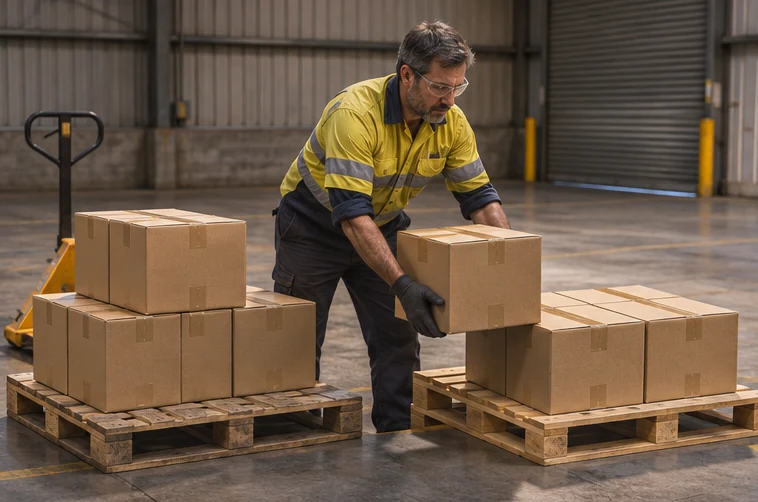
Cover illustration by Industry Applied, generated with AI. Rebuilding shipping pallets on a warehouse dock.
Related reading
A warehouse that dismantles a pallet and builds two new logistic units needs a distinct Serial Shipping Container Code (SSCC) for each new unit. Copying the inbound pallet label onto both loads gives the receiver two physical objects with one identity. The carton count may reconcile at despatch while the second arrival looks like a repeated scan.
Follow the cartons through the split
Consider an Australian distributor receiving 54 cartons on one pallet. A regional branch orders 18. The warehouse takes the original load apart and rebuilds the remaining 36 as a separate outbound unit. Close the inbound pallet record at that transformation. Record which 18 cartons went to the branch and which 36 went to the second destination. Preserve each product and lot reference wherever the business tracks those attributes.
The identifiers in the table are plain-language aliases for the example. A working GS1 label uses the SSCC allocated by the business responsible for creating the logistic unit. The pallet’s weight, destination and contents can sit alongside that identifier in the despatch record. Printing a second physical label for another side of the same pallet is a different operation from creating a second pallet.
Worked data
Pallet record | Movement | Cartons |
Inbound | Closed on rebuild | 54 |
Branch load | New unit | 18 |
Second load | New unit | 36 |
Download the figures in this worked example (CSV)
Test the receiving screen
Scan the branch pallet twice in a training transaction. The receiving system should show one logistic unit and offer a duplicate-scan outcome. Then scan the second pallet. Its different identity should open the other contents record. That two-part test catches both failure modes: double-counting a repeated scan and discarding a genuine second arrival.
If the original pallet continues intact, the premise changes. Trace what actually happened on the dock before retiring an identifier. On a busy despatch shift, the most useful evidence is a dated relationship between physical units, their contents and the outbound consignment.
Sources
GS1 · Logistic Label Guideline
Cover illustration by Industry Applied, generated with AI. Rebuilding shipping pallets on a warehouse dock.