
Manufacturing
A filler averages 503 grams. Which head is pulling the average up?
A two-head filling run shows why a combined mean can conceal a persistent difference between lanes. Work back from pack identity to the head that filled it.
An overall mean of 503 g can come from two well-centred heads or two heads running in opposite directions. If the mean is the only retained number, the maintenance team cannot tell which. Keep the head or lane identifier with each check and compare like packs at the same stage of the run.
Separate a balanced sequence
Suppose a factory measures equal numbers from two filler heads on a 500 g nominal product. Head A produces a mean net content of 497 g and head B a mean of 509 g. The combined mean is 503 g. The two means are 12 g apart. Averaging the heads has hidden a useful mechanical or process signal.

Worked data
Population | Packs checked | Mean net fill (g) |
Head A | 20 | 497 |
Head B | 20 | 509 |
Combined | 40 | 503 |
Download the figures in this worked example (CSV)
Ask whether the balance moves with the products
Take time-matched samples from each head through startup, steady running and a refill of the feed vessel. Where packs use different packaging lots, verify the tare basis first. If the apparent difference moves with the packaging lot, changing a nozzle may do little. If it follows the head after controlling for product and tare, examine that lane’s maintenance and operating records.
At unequal throughput, weight the means by pack counts. If A supplied three quarters of production at the same mean values, the combined mean would fall to 500 g. That apparent change requires no change in either head. Track head-level means, spread and throughput together.
Australian trade measurement rules distinguish applicable systems and sampling requirements. The NMI guide is the reference for those obligations. This short process investigation cannot establish a lot’s legal compliance or justify releasing packs on the strength of an average.
Sources
National Measurement Institute · Guide to the sale of pre-packaged goods
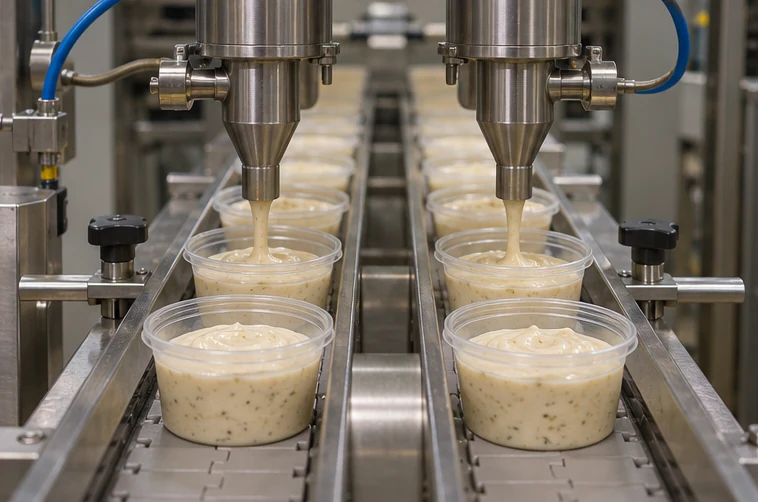
Cover illustration by Industry Applied, generated with AI. Parallel filling heads on a packaging line.
Related reading
An overall mean of 503 g can come from two well-centred heads or two heads running in opposite directions. If the mean is the only retained number, the maintenance team cannot tell which. Keep the head or lane identifier with each check and compare like packs at the same stage of the run.
Separate a balanced sequence
Suppose a factory measures equal numbers from two filler heads on a 500 g nominal product. Head A produces a mean net content of 497 g and head B a mean of 509 g. The combined mean is 503 g. The two means are 12 g apart. Averaging the heads has hidden a useful mechanical or process signal.
Worked data
Population | Packs checked | Mean net fill (g) |
Head A | 20 | 497 |
Head B | 20 | 509 |
Combined | 40 | 503 |
Download the figures in this worked example (CSV)
Ask whether the balance moves with the products
Take time-matched samples from each head through startup, steady running and a refill of the feed vessel. Where packs use different packaging lots, verify the tare basis first. If the apparent difference moves with the packaging lot, changing a nozzle may do little. If it follows the head after controlling for product and tare, examine that lane’s maintenance and operating records.
At unequal throughput, weight the means by pack counts. If A supplied three quarters of production at the same mean values, the combined mean would fall to 500 g. That apparent change requires no change in either head. Track head-level means, spread and throughput together.
Australian trade measurement rules distinguish applicable systems and sampling requirements. The NMI guide is the reference for those obligations. This short process investigation cannot establish a lot’s legal compliance or justify releasing packs on the strength of an average.
Sources
National Measurement Institute · Guide to the sale of pre-packaged goods
Cover illustration by Industry Applied, generated with AI. Parallel filling heads on a packaging line.