
Manufacturing
The supplier changed from 12 jars to 10. What happens to the case GTIN?
A shorter case can leave a warehouse 80 jars short on a 40-case order. Work through the product master, receiving conversion and open purchase order.
When the number of trade items in a case changes, GS1’s pack/case quantity rule calls for a new GTIN at the affected packaging level. A jar whose own identity and declared contents stay the same can retain its individual GTIN. The practical problem lands in purchasing first: an order expressed in cases can change size without anybody changing the number on the order.
Count what the buyer intended
A buyer orders 40 cases under the old arrangement of 12 jars. That means 480 jars. If a supplier sends 40 of the new ten-jar cases, the truck brings 400 jars. The 80-jar shortfall is eight new cases. Receiving the load against an old twelve-to-one conversion would book inventory that nobody can pick.

Worked data
Order basis | Packing | Physical jars |
Original order | 40 × 12 | 480 |
Unamended delivery | 40 × 10 | 400 |
Revised quantity | 48 × 10 | 480 |
Download the figures in this worked example (CSV)
Keep both cases available during changeover
Give the old and new cases separate records with their own GTIN, unit conversion and effective dates. Check which unit the supplier used for its price. A price per case that stays constant when the case shrinks from twelve to ten increases the price per jar by 20%. That comparison assumes the same freight treatment and jar contents.
Use one old and one new case in a receiving test. Scan each, put away one case, then pick individual jars from both. The transaction history should subtract twelve or ten according to the stock actually received. Keep the old conversion available for returns from before the change. Rewriting yesterday’s conversion makes today’s receiving total look tidy at the expense of historical stock.
Resolve the open order
For a customer who ordered 480 jars, amend the case count or agree a short delivery. For a customer who specifically ordered 40 shelf-ready cases, ask which presentation they accept. Those are different promises, even though both originally appeared on the purchasing screen as “40 cases”.
What happens when the two cases share a depot?
Suppose the depot already holds ten old cases and receives the amended delivery of 48 new cases. Its stock report can correctly show 58 cases, but “58 × the current case size” will now be wrong. The shelf contains 10 × 12 + 48 × 10 = 600 jars. Converting all 58 cases at ten jars would understate stock by 20. Converting everything at twelve would overstate it by 96. A cycle counter should be able to record the two outer GTINs separately and land on the same 600 units.
Now imagine a branch asks for 24 jars. An allocation system that knows only the new case size may instruct the picker to open three cases. Two old cases would fulfil the request without opening any. Whether the depot should preferentially pick older stock depends on expiry and customer requirements, but the master data should leave that choice available. Look at the pick document as well as the database: a ticket labelled “two cases” still leaves room for a 20-jar despatch if it omits the pack identity.
At cutover, keep a sample label and packing specification for both configurations with the date the supplier introduced the change. For a short delivery claim three months later, that evidence is more valuable than a current catalogue page. It lets purchasing explain which physical unit each party meant when it agreed to “one case”.
Sources
GS1 · GTIN Management Standard, pack/case quantity
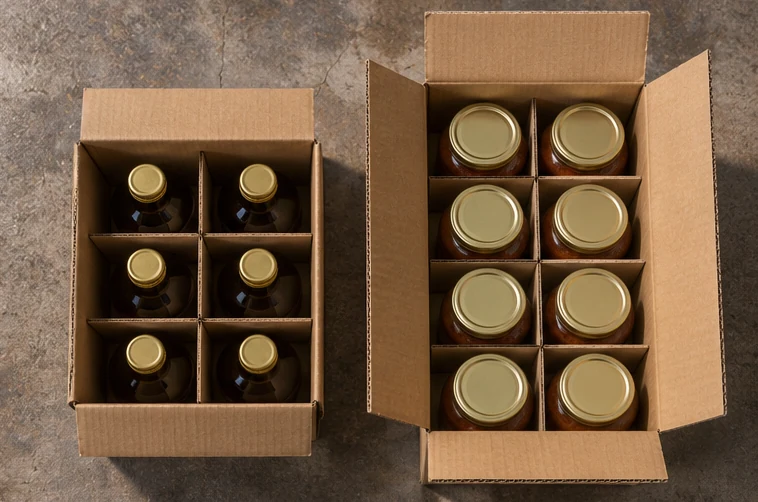
Cover illustration by Industry Applied, generated with AI. Two open trade cases of packaged jars.
Related reading
When the number of trade items in a case changes, GS1’s pack/case quantity rule calls for a new GTIN at the affected packaging level. A jar whose own identity and declared contents stay the same can retain its individual GTIN. The practical problem lands in purchasing first: an order expressed in cases can change size without anybody changing the number on the order.
Count what the buyer intended
A buyer orders 40 cases under the old arrangement of 12 jars. That means 480 jars. If a supplier sends 40 of the new ten-jar cases, the truck brings 400 jars. The 80-jar shortfall is eight new cases. Receiving the load against an old twelve-to-one conversion would book inventory that nobody can pick.
Worked data
Order basis | Packing | Physical jars |
Original order | 40 × 12 | 480 |
Unamended delivery | 40 × 10 | 400 |
Revised quantity | 48 × 10 | 480 |
Download the figures in this worked example (CSV)
Keep both cases available during changeover
Give the old and new cases separate records with their own GTIN, unit conversion and effective dates. Check which unit the supplier used for its price. A price per case that stays constant when the case shrinks from twelve to ten increases the price per jar by 20%. That comparison assumes the same freight treatment and jar contents.
Use one old and one new case in a receiving test. Scan each, put away one case, then pick individual jars from both. The transaction history should subtract twelve or ten according to the stock actually received. Keep the old conversion available for returns from before the change. Rewriting yesterday’s conversion makes today’s receiving total look tidy at the expense of historical stock.
Resolve the open order
For a customer who ordered 480 jars, amend the case count or agree a short delivery. For a customer who specifically ordered 40 shelf-ready cases, ask which presentation they accept. Those are different promises, even though both originally appeared on the purchasing screen as “40 cases”.
What happens when the two cases share a depot?
Suppose the depot already holds ten old cases and receives the amended delivery of 48 new cases. Its stock report can correctly show 58 cases, but “58 × the current case size” will now be wrong. The shelf contains 10 × 12 + 48 × 10 = 600 jars. Converting all 58 cases at ten jars would understate stock by 20. Converting everything at twelve would overstate it by 96. A cycle counter should be able to record the two outer GTINs separately and land on the same 600 units.
Now imagine a branch asks for 24 jars. An allocation system that knows only the new case size may instruct the picker to open three cases. Two old cases would fulfil the request without opening any. Whether the depot should preferentially pick older stock depends on expiry and customer requirements, but the master data should leave that choice available. Look at the pick document as well as the database: a ticket labelled “two cases” still leaves room for a 20-jar despatch if it omits the pack identity.
At cutover, keep a sample label and packing specification for both configurations with the date the supplier introduced the change. For a short delivery claim three months later, that evidence is more valuable than a current catalogue page. It lets purchasing explain which physical unit each party meant when it agreed to “one case”.
Sources
GS1 · GTIN Management Standard, pack/case quantity
Cover illustration by Industry Applied, generated with AI. Two open trade cases of packaged jars.